
What dissipative structures reveal about living organizations
There is a statement from physics that sounds unremarkable and yet governs everything that decays around us: the Second Law of Thermodynamics says that disorder in an isolated system always increases. Coffee goes cold, iron beams rust, every tidy room turns back into chaos given enough time. The direction of time itself, it is said, is the direction of growing entropy.
And yet the world is full of order. Hurricanes spin for days in the same vast spiral. A flame holds its shape. A single living organism sustains a breathtakingly intricate structure for decades, while everything around it drifts toward decay. How does that fit together? How can order arise spontaneously, in a universe that supposedly tilts inexorably toward chaos?
The answer to this question is one of the most beautiful concepts in modern science — and, as it turns out, it has a surprising amount to say about why some organizations stay alive while others calcify.
The paradox dissolves at the word “isolated”
The trick hides in a single word that is easily skipped over: isolated. The Second Law applies strictly only to isolated systems — those that exchange neither energy nor matter with their surroundings. A perfectly sealed container. A hermetically closed room. In nature, such a thing essentially never exists.
The interesting things happen in open systems. An open system continuously exchanges energy and matter with its environment — it takes something in and gives something off. And precisely here a margin opens up that the Second Law by no means forbids: an open system can increase its internal order, as long as it generates more disorder elsewhere and exports it outward. The overall balance of the universe still holds. The local order is paid for — with the entropy the system exports.
That is the heart of it. Order does not arise in spite of the Second Law, but in its slipstream: as a local island of structure, carried by a flow that passes through it and sweeps the inevitable disorder out the other side.
Far from equilibrium
The decisive concept is the distance from thermodynamic equilibrium.
A system at equilibrium is, frankly, boring. Everything is evenly distributed, the temperature uniform throughout, the entropy maximal — and nothing happens anymore. It is the state of perfect inertia. Picture a room in which the heat has completely evened out: no current, no gradient, no structure. Dead, in the physical sense.
Pump energy continuously through an open system, by contrast, and you hold it far from equilibrium. You never let it come to rest. You maintain a gradient — a temperature gradient, a concentration gradient, a voltage gradient. And precisely there, in this persistent imbalance, the astonishing thing happens: the system organizes itself, entirely on its own, into ordered patterns.
Such formations are called dissipative structures. “Dissipative” — from the Latin dissipare, to scatter — because the structure continuously consumes energy and channels it outward. It is not a frozen crystal lattice that, once formed, persists forever. It is a process, a dynamic flow-equilibrium that, in every moment, converts energy in order to sustain itself. If the flow stops, the structure disappears. It pays for its internal order anew in every second — with the entropy it exports to its surroundings.
The Second Law remains entirely untouched by all this. The order is only local, and it is only borrowed.
Examples you can see
As abstract as this sounds — you can literally watch it happen.
The classic textbook example is Bénard cells. Heat a thin layer of fluid uniformly from below, and at first nothing visible occurs: the heat simply travels upward by conduction, molecule by molecule, without anything moving. But raise the heat input past a certain threshold, and the picture flips abruptly. The fluid begins to flow — not chaotically, but in a strikingly regular pattern: it arranges itself into hexagonal convection cells, with warm fluid rising in the center of each and cooler fluid sinking at the edges. From perfectly uniform heating, visible, geometric structure emerges. Millions of molecules that were moving in complete disorder suddenly find a common rhythm.
What is fascinating about this: no one told the molecules where to fall in line. There is no blueprint, no central controller, no hexagonal form imposed from outside. The order arises from the interplay itself.
There are more such examples, and each is spectacular in its own way:
- The Belousov-Zhabotinsky reaction — a chemical solution that rhythmically and seemingly by magic changes color, in regular pulses, forming traveling spiral patterns as it goes. A chemical clock that sets itself.
- Hurricanes, which forge a coherent, long-lived rotational structure out of the temperature gradient between warm ocean and cool upper air.
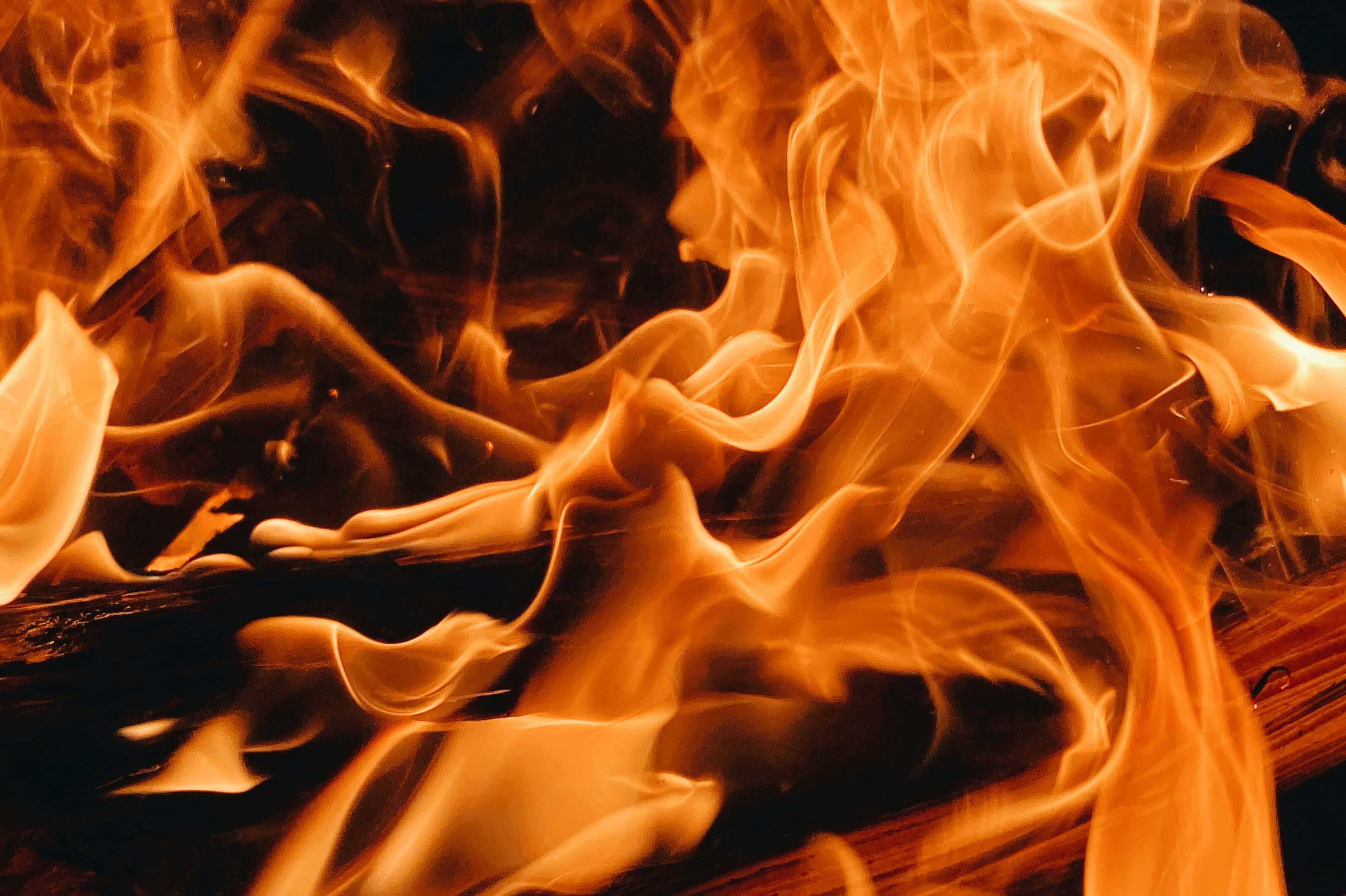
- Flames, which sustain their characteristic shape solely through the steady stream of fuel and oxygen.
- And, as the highest and most complex stage, every living organism. In the physical sense, life is a dissipative structure par excellence: an open system that holds itself far from equilibrium by continuously taking in energy (food, light, heat) and giving off entropy. Death is, soberly viewed, nothing other than the return to equilibrium.
Prigogine and a new view of time
We owe this perspective above all to Ilya Prigogine, a Russian-born chemist who worked in Belgium and received the 1977 Nobel Prize for his work on thermodynamics far from equilibrium. His contribution was not merely a calculation, but a shift in the way we look.
Classical physics had long regarded the universe as a kind of enormous clock — deterministic, reversible, in principle fully calculable. Prigogine set against it a different picture: a world in which time has a genuine direction, in which the new can come into being, in which chance and necessity work together. His famous phrase was “order through fluctuations.” It is not calm, predictable equilibrium that produces the interesting things, but precisely the turbulent zone far from it, where small random fluctuations suddenly gain the power to shape form.
With this, a concept migrated into the exact natural sciences that had previously belonged more to biology and philosophy: self-organization. The insight that complex order does not necessarily require a designer, but can emerge from the system itself when the conditions are right.
The threshold: fluctuation becomes order
The truly exciting moment is the transition. What exactly happens at the threshold where structure suddenly emerges from nothing?
Raise the energy flow through a system slowly and steadily, and for a long time — qualitatively — nothing happens. The system changes gradually but stays within its old behavioral pattern. Until it reaches a critical point. At this point, the previous, uniform behavior becomes unstable. Physics calls this branching point a bifurcation: the system’s path splits, and several possible new states become available.
What now decides which of these states actually prevails? Here lies perhaps the most surprising part of the whole story: a tiny, random fluctuation. In the Bénard cells, for instance, a barely measurable local fluctuation decides which way a convection roll turns and exactly where the hexagonal pattern comes to lie. Right at the critical point, the system is so sensitive that this small fluctuation is not damped away but amplified — it propagates through the entire system and “tips” it into a new, ordered state.
Two deep insights follow from this. First: order here is not imposed from outside but born from within. It is an emergent property of the interplay, not an embedded design. Second: at the bifurcation, strict predictability collapses. Which of the possible states settles in depends on the smallest of chance events — and thus on the concrete history of this one system in this one moment. Determinism gives way to contingency. The system has, figuratively speaking, a biography.
This is self-organization in its purest physical form.
What this means for organizations
And now the leap that makes this concept so irresistible for us. Because an organization is, for all the caution one owes to analogies, at its core exactly this: a dissipative structure.
Its order — the coordination between people, the shared culture, the well-rehearsed processes, the common understanding of “how we work around here” — is not a fixed construction erected once and for all. It is a dynamic flow-equilibrium. It exists only as long as a flow feeds it: attention, communication, work, resources, meaning. If that flow stops, the order falls apart — just as the Bénard cells vanish the moment you switch off the heat. Anyone who has ever watched a well-rehearsed collaboration crumble after a reorganization or the departure of a key person has felt this physics firsthand.
Two things follow.
First: without flow, order decays. Structure in an organization is not something you set up once and then own. It must be “paid for” anew in every moment — through lived communication, through recurring interaction, through the continual investment of energy. A culture you do not tend does not vanish dramatically; it simply seeps away. A process no longer used and discussed becomes an empty shell. The assumption that an established order is stable and self-sustaining is perhaps the most expensive error in organizational design.
Second, and this is the genuinely new insight: real new order does not arise in the equilibrium zone. Self-organizing teams, emergent practices, truly new forms of collaboration — they do not form in the comfortable, low-disturbance zone where everything runs smoothly and nothing is in motion. They arise far from equilibrium, precisely when enough “energy” runs through the system: challenge, new information, unresolved tension, intense interaction, real friction.
Here a whole landscape opens up:
- Too little flow → stagnation. An organization optimized too heavily for calm, smoothing-over, and conflict avoidance drifts toward equilibrium — and thus, in physical terms, toward the boring, structureless end state. Maximum comfort, minimum vitality. Nothing new emerges anymore.
- Too much flow → chaos. Flood the system with too much energy — permanent crisis, perpetual reorganization, overload, sensory overstimulation — and no structure forms; it simply disintegrates into turbulence. That, too, is not order.
- The right flow → spontaneous new structure. Between the two lies a narrow, fertile band that complexity research likes to call the edge of chaos. Precisely there, far enough from equilibrium and yet not in chaos, self-organization gets its chance.
The practical consequence for leadership shifts fundamentally as a result. The task is not to design order from the top and impose it on the organization — that fundamentally does not work with dissipative structures; their order comes from within. The task is to shape the conditions under which the right order can emerge on its own: to dose the appropriate flow, to hold the productive imbalance, neither calming things to death nor driving them into chaos. Leadership thus becomes less a matter of architecture and more one of gardening.
The tipping point — and a look ahead
And then there is the bifurcation. It is the physical template for something every organization knows from its own experience: the tipping point.
There are moments when an organization stands at a critical point — in a crisis, before a fundamental shift in strategy, in the middle of a cultural transformation. In such moments the same logic applies as at the bifurcation of the Bénard cells: the old pattern has become unstable, several possible futures lie open, and small events can suddenly carry enormous leverage. A single courageous remark, a successful pilot project, a symbolic gesture from leadership — what in normal times would have fizzled out without consequence can, at the tipping point, swing the entire system into a new state. The very levers that move nothing in calm phases become, here, the switches that set the points.
Those who grasp this see transformation with different eyes: not as a linear plan to be worked through step by step, but as the patient guiding of a system toward a point at which a new state first becomes possible at all — and as the alert recognition of the moment when a small impulse makes the great difference.
That is the beautiful, almost consoling punchline of dissipative structures. The order we admire in living systems — in a flame, in an organism, in a well-functioning team — is not set in stone, nor is it decreed from outside. It is alive because it is borrowed. It exists only in the flow, and therein lies its very strength: what keeps bringing itself forth anew out of the flowing can also keep reinventing itself.